Why Planned Preventative Maintenance Matters
For many organisations, building maintenance becomes reactive by default. A system fails, a leak appears or an air conditioning unit stops working — and only then does the issue become urgent. While this approach may seem manageable in the short term, it often creates a cycle of disruption, unplanned costs and ongoing operational pressure. Reactive maintenance also makes it much harder to stay on top of compliance responsibilities, equipment condition and long-term building performance.
Planned preventative maintenance (PPM) takes a different approach. Instead of waiting for problems to occur, maintenance is scheduled proactively to help maximise equipment efficiency, reliability, lifespan and compliance as well as identify issues early, reducing avoidable disruption.
Reactive vs Planned Preventative Maintenance
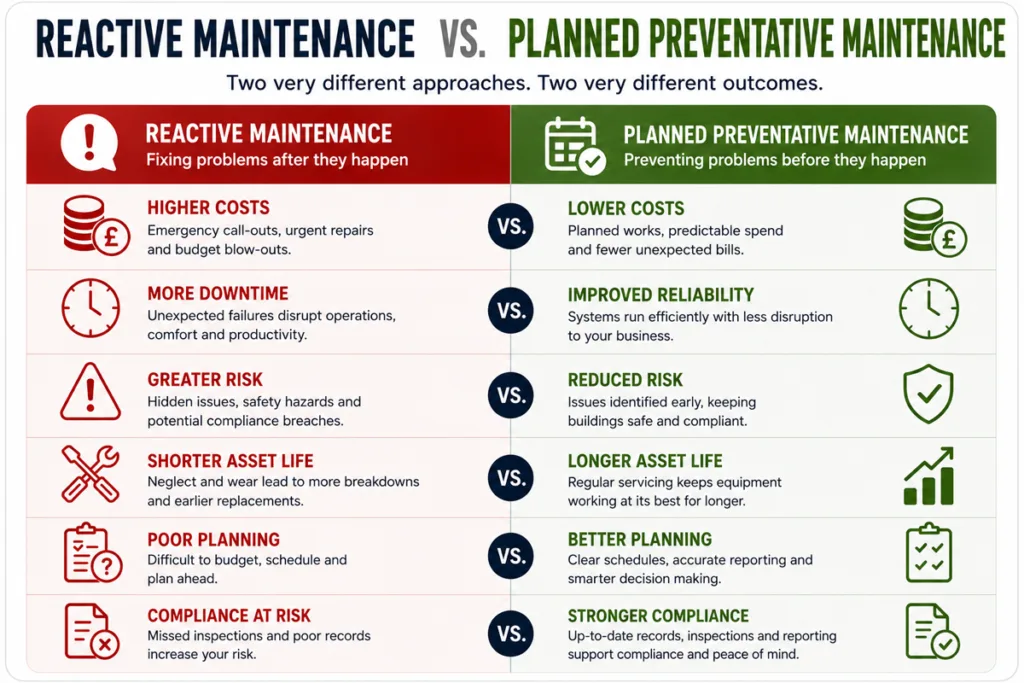
Reactive maintenance means responding to faults after they happen, a boiler breaks down, an air conditioning system fails or a leak suddenly causes disruption. The issue is reported, an engineer attends and the immediate problem is resolved. While reactive support will always be needed at times, relying on it as the main maintenance strategy often leads to more disruption, higher costs and recurring issues.
Reactive maintenance puts organisations in a position where they are constantly responding to problems after they have already caused disruption. Emergency call-outs, downtime and urgent repairs often become the norm, making budgeting and operational planning far more difficult.
Planned preventative maintenance (PPM) takes a different approach. Planned maintenance creates a more structured and predictable approach. Systems are inspected regularly, scheduled around operational requirements to minimise disruption. Over time, this generally leads to improved reliability, efficiency, lifespan and compliance. It also allows businesses to take a more strategic approach to maintaining their assets, rather than continually firefighting problems as they arise.
Why Planned Maintenance Is Becoming Increasingly Important
Commercial buildings are becoming more complex, while expectations around compliance, safety and operational reliability continue to increase. For many businesses, building systems are critical to day-to-day operations. Heating, ventilation, cooling and water systems all play a major role in maintaining safe, comfortable and functional environments for staff, customers, visitors and occupants.
When systems fail unexpectedly, the impact can quickly spread beyond the equipment itself. Downtime, occupant discomfort, operational disruption and emergency repair costs can all follow. Planned preventative maintenance helps reduce these risks by creating a more proactive approach to managing building systems throughout the year.
The risks of not planning maintenance
When it comes to estate maintenance, organisations generally operate on one of two models: reactive or proactive. While reactive maintenance may seem easier to cope with in the short term, it often leads to higher costs, greater risk and more disruption over time.
Planned preventative maintenance (PPM) takes a more structured, proactive approach. It focuses on compliance along with equipment health, efficiency and lifespan, often anticipating problems before they escalate, protecting both your estate and your budget.
What A robust Maintenance Plan should include
A good maintenance plan is about much more than reacting to problems as they arise. It helps businesses keep systems safe, reliable, compliant and running properly throughout the year, while reducing avoidable disruption and unexpected costs. Planned preventative maintenance (PPM) focuses on regular servicing, inspections and maintenance to help identify issues early and keep buildings operating more efficiently.
At its core, a robust maintenance plan should include:
-
Planned preventative maintenance (PPM) Routine servicing, inspections and maintenance tasks scheduled throughout the year to help reduce breakdowns, maintain system performance and identify issues early.
-
Reactive maintenance procedures Clear processes for reporting, prioritising and responding to unexpected faults or system failures quickly and safely.
-
Asset tracking and maintenance records A detailed asset register containing information such as equipment locations, servicing history, condition, age and replacement planning.
-
Condition inspections and reporting Regular assessments of building systems and equipment to help identify deterioration, risks or maintenance requirements before they become major issues.
-
Condition inspections and reporting Regular assessments of building systems and equipment to help identify deterioration, risks or maintenance requirements before they become major issues.
-
Compliance Coordination Planned scheduling and tracking of statutory inspections, testing and compliance-related responsibilities across building systems.
-
Budget forecasting and lifecycle planning Better visibility over future maintenance requirements, upgrade planning and anticipated repair or replacement costs.
-
Scheduling and contractor coordination Planned maintenance scheduling designed to reduce operational disruption and improve coordination between sites, contractors and building users.
How planned maintenance supports Your compliance
Planned maintenance also plays an important role in compliance. Most commercial building systems require regular inspections, servicing, testing and record keeping to maintain either or both manufacturer standards or legislative compliance. Without a clear maintenance plan, it becomes much easier for checks to be missed, delayed or inconsistently managed.
A reactive approach to maintenance is no longer sustainable – not financially, operationally or from a compliance perspective. With rising costs and increasing regulatory pressures, businesses need to shift towards a proactive maintenance strategy.
Change to A more proactive approach to maintenance
Reactive maintenance will always be necessary at times, but relying on it as the main maintenance strategy often creates greater disruption, higher costs and ongoing avoidable problems.
Planned preventative maintenance helps businesses take a more proactive approach, improving reliability, supporting compliance and creating better visibility over the condition of their buildings and systems.
At Southern Maintenance Solutions, we support businesses with planned maintenance, inspections, repairs and compliance support across commercial heating, air conditioning, ventilation, plumbing and water systems.
Ready to build an effective maintenance plan
Our team will help plan with confidence. Get in touch with our team today