What Is Legionella?
Legionnaires’ disease is a serious type of pneumonia. Symptoms can include coughing, fever, breathing difficulties and muscle aches, and some people are far more vulnerable than others, particularly older people, smokers and those with weakened immune systems.
In environments such as schools, healthcare settings and public buildings, proper legionella control is especially important due to the number of people using the building and the responsibility to maintain safe water systems throughout the year.
Outbreaks are relatively rare, but the consequences can be extremely serious, which is why legionella control remains such an important part of commercial building compliance and water hygiene management.
Legionella Loves the Summer As Well
We all love the warm summer days, unfortunately so does Legionella – infact it thrives in warmer summer temperatures. Summer is the perfect time for Legionella to multiply and colonise within your water system, with no one knowing it’s there. It favours still, stagnant water, and will take the easier opportunity of warmer temperatures to grow and find places to hide. With that comes potential illness, compliance issues, HSE worries and high costs to remove it.
Where Legionella Likes To Develop
Buildings with changing or seasonal reductions in occupancy such as schools, offices, hotels etc or low-use areas within a business can often present increased risk if water systems are not managed carefully.
Schools are a good example of this. Long holiday periods, changing building use and infrequently used outlets can all create conditions where water hygiene management becomes especially important.

Steps To Control Legionella
Legionella control is an important part of your overall water hygiene management and compliance. This is important, as people often think that a legionella risk assessment and test is all they need to do, but it is just one part of your overall water hygiene responsibilities. The good news is you can do a lot of the legionella control yourself, alongside ourselves as part of the overall water hygiene service we provide you.
How Our Legionella & Water Hygiene Services Help
-
Legionella Risk Assessments We can provide annual Legionella risk assessments for all of your hot and cold water systems in place on site. Are there any areas of particular concern? Is any remedial work required? For example, can dead-leg pipes be removed rather than just capped? That’s one less place for Legionella to hide.
-
TMV Servicing TMV servicing helps maintain safe water temperatures and ensures thermostatic mixing valves operate correctly, reducing the risk of conditions that can encourage Legionella growth within water systems.
-
Water Temperature Testing Legionella bacteria thrives in water between 25-45°c, so if it’s in that range, we check the boiler or calorifier to see what’s going on. We schedule planned visits to check hot and cold water temperatures across your site.
-
Equipment & Pipework Checks On our scheduled visits, we will check over critical elements of your system, especially DHW expansion vessels, non-return valves, pipework condition and insulation.
-
Water Storage Tank Cleaning On our scheduled visits, we will professionally clean and disinfect your water storage tanks.
-
Remedial Works If Required Legionella bacteria thrives in water between 25-45°c, so if it’s in that range, it’s worth checking the boiler or calorifier to see what’s going on.
-
Compliance Documentation & Reporting To support your compliance obligations, every visit includes clear documentation and service records to help demonstrate ongoing water hygiene management and compliance.
What Steps You Can Take To Help
There’s not much you need to do, however you need to consider stagnant water. So if any of your buildings are unused for a period of time or used infrequently, these can create conditions where water hygiene management becomes especially important where water hygiene management becomes especially important and you can help ensure your water hygiene with these simple steps:
-
Taps and Outlets All taps and water outlets need to be flushed WEEKLY, for 2 minutes. That includes hot and cold taps, outside ones, sports halls, tanks, calorifiers and any dead-legs.
-
Showers & Toilets Flush all showers, too. Showerheads spray, and since you don’t want to breathe in any potential Legionella, stick the heads in a bucket of water to run through. Flush all toilets on site. You need to empty the cistern thoroughly, ensuring the toilet seat is down .
-
Keep Records Keep detailed records to show you have done these things. A good safety management system will make this a breeze instead of piles of paperwork.
A reliable Control Routine
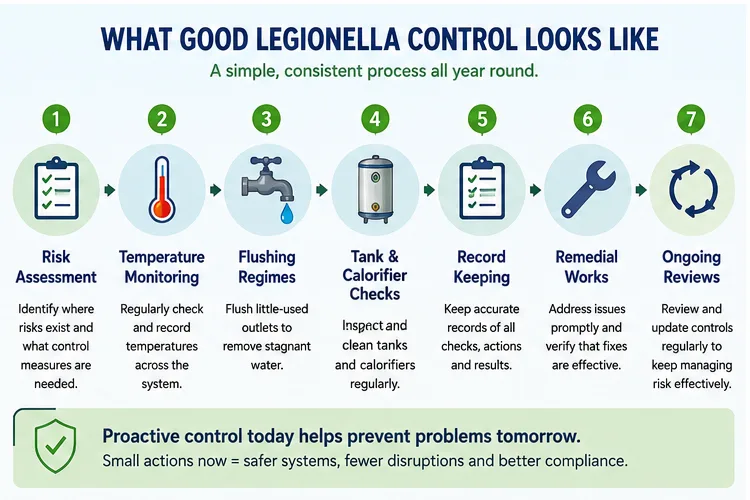
We always advise following a routine to ensure good legionella control. Below is the management routine we suggest with the weekly and monthly monitoring done by yourselves and the 6 monthly and annual tests, checks and inspections done by us – along with providing your required documentation and reports. This forms part of your overall water hygiene management and compliance.
| Weekly | Monthly | 6 Monthly | Annually | Ongoing |
|---|---|---|---|---|
| Flush little-used outlets | Temperature monitoring | Tank inspections | Risk assessment review | Record keeping |
| Flush little-used showers | Calorifier checks | Water storage tank inspection | Water storage tank cleaning | Review building usage changes |
| Shutdown management | Review monitoring results | Hot water temperature checks | TMV Servicing | Remedial works |
| Document what was done | Record the results | System condition reviews | Equipment and pipework inspections | Documentation |
Can Organisations Actually Get Caught?
Unfortunately yes, and it’s not uncommon. Most businesses do not deliberately ignore legionella responsibilities, it’s often just forgotten about or assumed everything is ok.
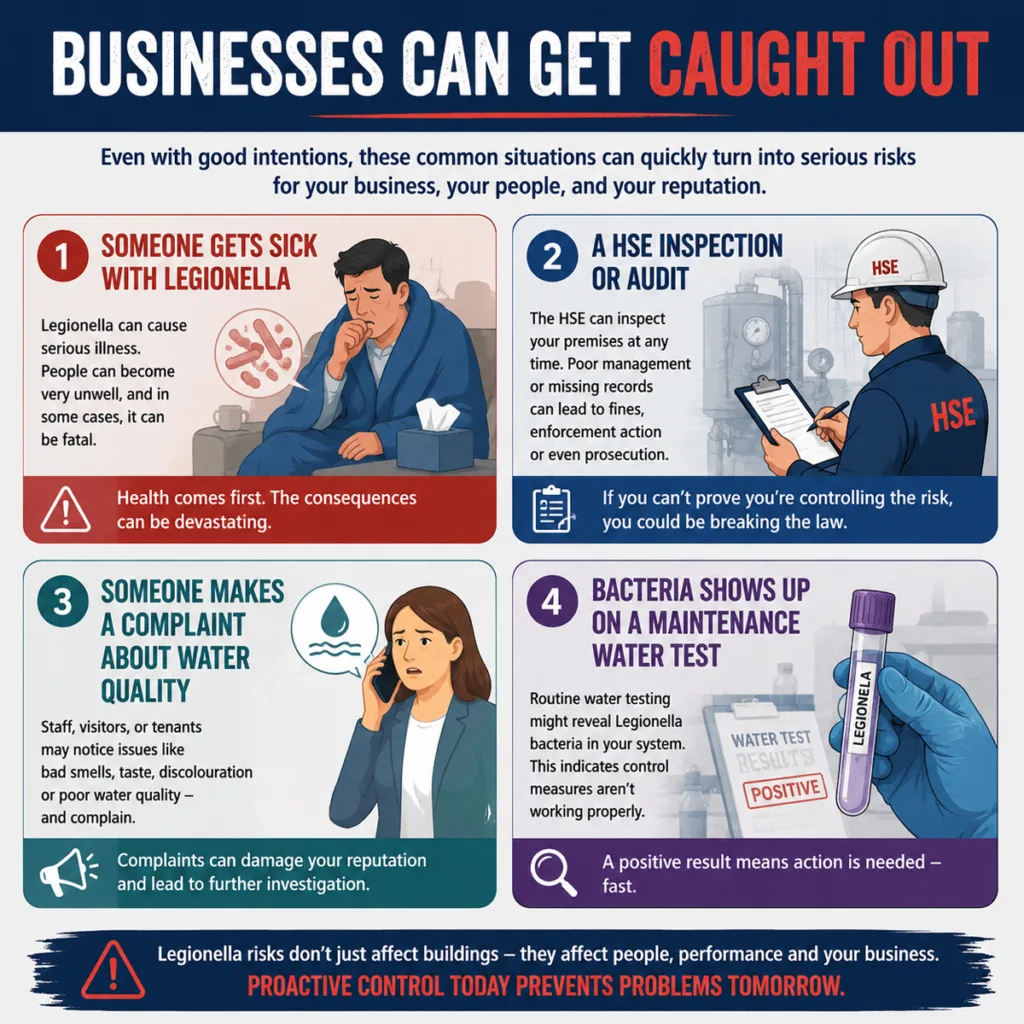
What often catches businesses out is when they are suddenly asked to demonstrate what controls are actually in place following on from a complaint, a HSE inspection or audit or worse still someone within your building or having visited becomes unwell.
In these events, if there has been poor or inconsistent monitoring or poor record keeping meaning you can not demonstrate active water hygiene testing, the lack of compliance can lead to HSE enforcement, penalties and fines or worse criminal charges (though that is extreme). It is, therefore, critical to stay compliant with your water hygiene and Legionella testing, with which we can happily help.
Change to A more proactive approach to Water Hygiene
Regular monitoring, planned inspections and clear record keeping all help create safer, more manageable water systems and reduce the likelihood of issues developing unnoticed over time.
At Southern Maintenance Solutions , we support businesses with legionella risk management, water hygiene monitoring, inspections and compliance support across commercial buildings and facilities.
By helping clients take a proactive approach to water hygiene management, we aim to support safer, more compliant and better managed buildings throughout the year.
Ready to build an effective Water Hygiene plan
Our team will help plan with confidence. Get in touch with our team today