Is Your Air Conditioning TM44 Compliant?
Under the Energy Performance of Buildings Regulations, air-conditioning systems with a combined effective rated output of more than 12kW must have a valid air-conditioning inspection carried out at least once every five years.
This is commonly referred to as a TM44 inspection.

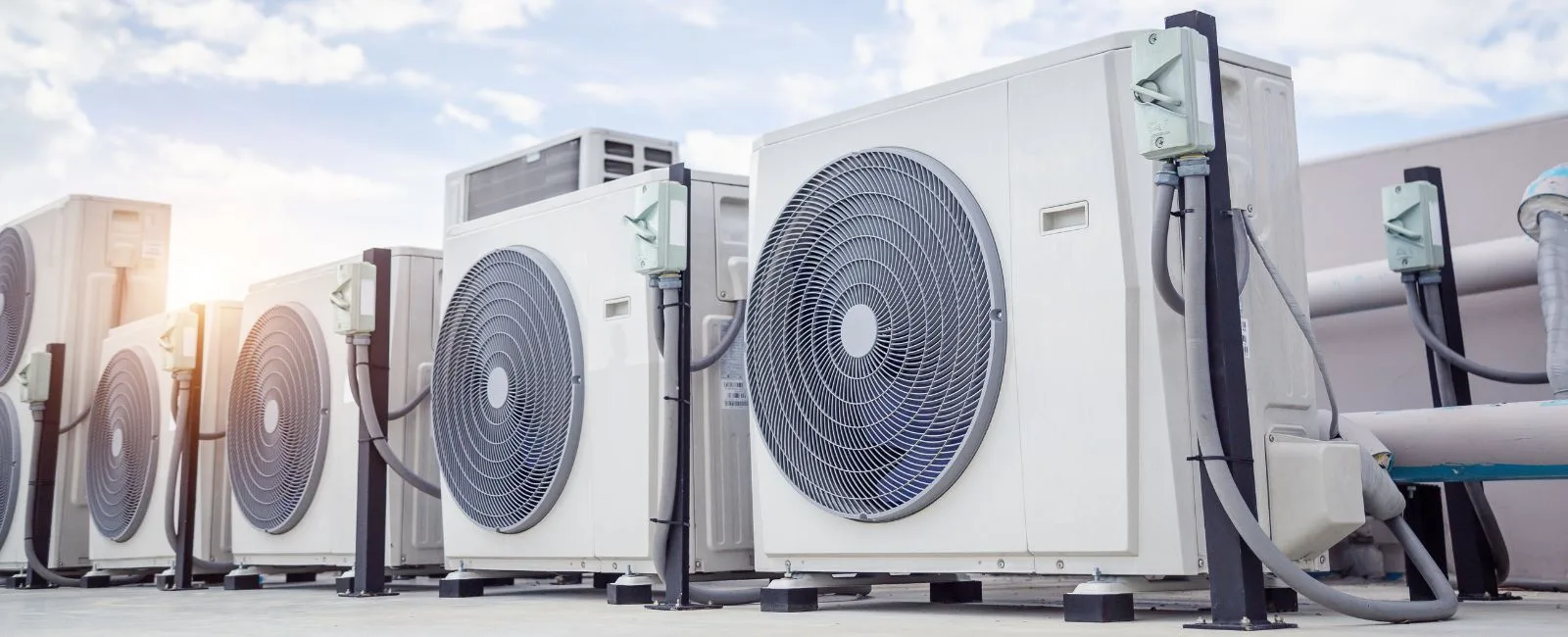
You may be affected even With small air-conditioning units
One of the most common misconceptions is that TM44 only applies to large commercial air-conditioning systems.
It doesn’t.
If a building contains several smaller air-conditioning units, their capacities may need to be considered together. This means that an office, school, retail premises, healthcare facility or other commercial building with a number of small split systems can still exceed the 12kW threshold and require an inspection.
Most Have Never Heard Of TM44 Inspections
Feeling Unsure? Not Quite Sure What You Have Or Need?
Not sure whether your air conditioning falls under TM44 regulations, or when your last inspection was?
Don’t worry — it’s not always obvious. Our team can help you establish whether your system requires an inspection, check your current compliance position and explain exactly what you need to do next.
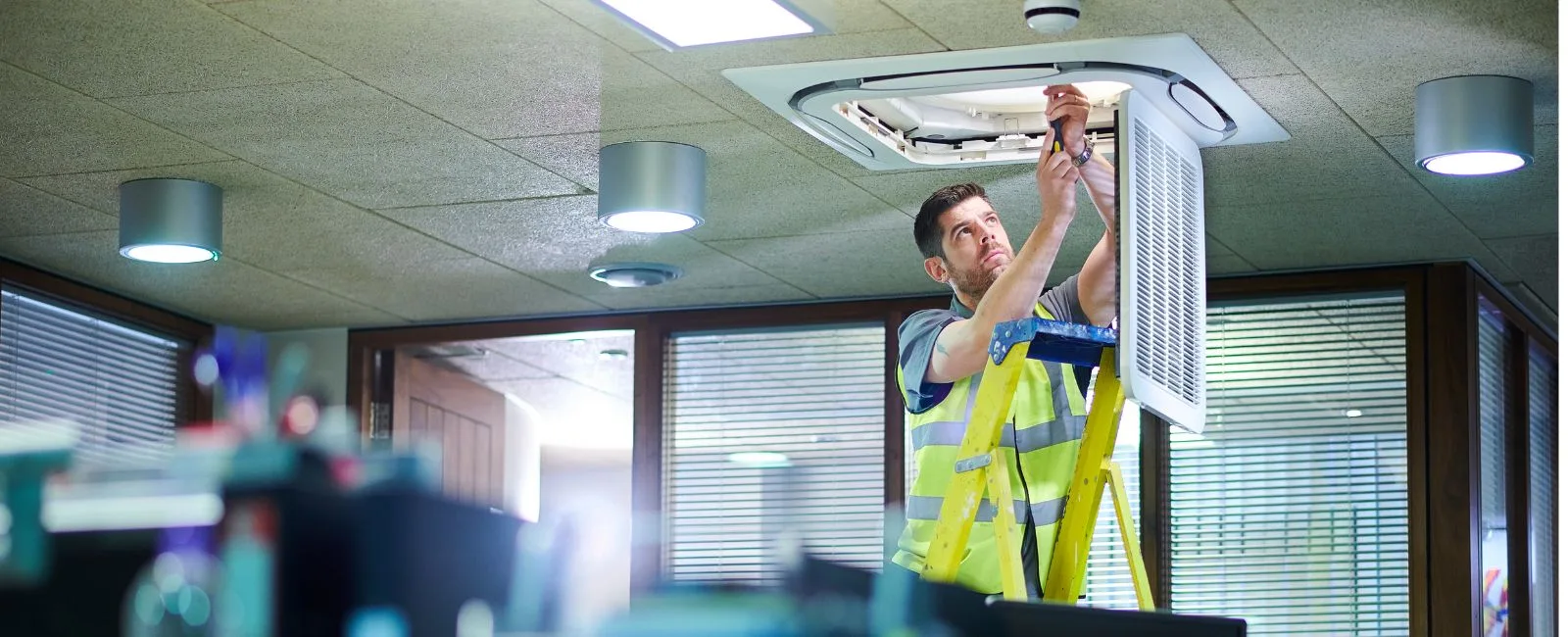
What is a TM44 inspection?
A TM44 inspection is an assessment of your air-conditioning system carried out by an accredited Air Conditioning Energy Assessor.
The purpose isn’t simply to issue another compliance certificate. The inspection considers how efficiently your air-conditioning system is operating and identifies opportunities to reduce energy consumption, operating costs and carbon emissions.
Depending upon the system, the assessment will typically consider:
- The air-conditioning equipment and its general condition
- Refrigeration equipment and heat exchangers
- The effectiveness and condition of system controls
- Temperature and operating-time settings
- If heating & cooling may be operating unnecessarily at the same time
- The air-conditioning equipment and its general condition
- Refrigeration equipment and heat exchangers
- The effectiveness and condition of system controls
- Temperature and operating-time settings
- If heating & cooling may be operating unnecessarily at the same time
Following the inspection, a formal Air Conditioning Inspection Report is produced and lodged on the government register. The report provides information on the current efficiency of the system, any faults identified and recommendations for potential improvements.
How often is a TM44 inspection required?
For appropriate systems, an inspection must be carried out at least every five years.
Importantly, this is separate from your normal air-conditioning servicing and maintenance. Having your air-conditioning equipment regularly serviced does not replace the requirement for a TM44 inspection.
What happens if you don't have a TM44?
TM44 inspections are a legal requirement, rather than simply industry best practice.
Trading Standards are responsible for enforcement and can request evidence of a valid Air Conditioning Inspection Report.
- Failure to have the required inspection can result in a £300 penalty charge.
- There can also be a separate £200 penalty for failing to provide a valid inspection report to an enforcement officer within seven days when requested.
- More importantly, an overdue or missing TM44 inspection means that the organisation responsible for the system is not meeting its obligations under the Energy Performance of Buildings Regulations.
- TM44 inspections are a legal requirement, not just industry best practice.
Not sure whether your building needs one?
You’re certainly not alone.
With multiple split systems, extensions to existing installations and equipment being added or replaced over the years, it isn’t always obvious whether a building has passed the 12kW threshold – or when its last inspection was carried out.
Southern Maintenance Solutions can help.
If you are unsure whether your air-conditioning system requires a TM44 inspection, whether your existing report is still valid, or would like to arrange an inspection, please get in touch with our team.
We can help establish whether your system falls within the regulations and advise you on the next steps required to keep your building compliant.