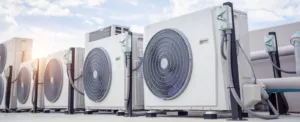
When it comes to maintaining a comfortable & productive environment in commercial buildings, the role of a reliable HVAC system cannot be overstated. Whether it’s ensuring employees are warm during the winter, cool in the summer, or breathing high-quality air all year round, the right system makes all the difference.
In this guide, we’ll explore everything you need to know about commercial heating & cooling systems, including:
-
- How HVAC systems work
-
- The most common types of commercial HVAC systems
-
- The importance of HVAC maintenance
-
- Tips for choosing the best system for your building
Ready to optimise your commercial HVAC solutions? Let’s dive in.
What Is a Commercial HVAC System?
An HVAC system—short for heating, ventilation, & air conditioning—is designed to regulate indoor temperatures, air quality, & humidity. Unlike residential systems, commercial HVAC systems are built to handle larger spaces such as offices, retail stores, & industrial facilities.
These systems work by circulating conditioned air through the building using a network of ducts, pipes, & refrigerants. Key components include:
-
- Heating units (like heat pumps or furnaces)
-
- Cooling systems (such as chillers or split systems)
-
- Ventilation systems to maintain fresh, clean indoor air
-
- Advanced thermostats & controls for energy efficiency
Given that commercial buildings account for a significant percentage of global energy consumption, choosing the right HVAC solutions can directly impact operational costs & sustainability goals.
Different Types of Commercial HVAC Systems
The market offers a wide array of HVAC products to suit various building sizes, energy needs, & budgets. Below are the most common commercial HVAC systems & their benefits.
1. Split Systems
A split system is one of the most common configurations, especially for smaller commercial buildings like offices or retail shops. It gets its name from the way its components are divided between:
-
- An outdoor unit (housing the condenser & compressor)
-
- An indoor unit (containing the air handler or evaporator)
Single-split systems are ideal for individual rooms, while multi-split systems connect multiple indoor units to a single outdoor unit, making them space-efficient.
Advantages:
-
- Affordable & easy to install
-
- Energy-efficient for smaller spaces
-
- Individual zoning for tailored comfort
Disadvantages:
-
- Outdoor units take up space, especially in single-split setups
-
- Installation complexity increases with multi-split systems
2. Variable Refrigerant Flow (VRF) & Variable Refrigerant Volume (VRV) Systems
Often referred to as VRF systems (or VRV systems, depending on the manufacturer), these are cutting-edge technologies for medium-to-large commercial buildings. They use refrigerants to both heat & cool spaces & can adjust the refrigerant flow to meet the specific needs of different zones within a building.
Heat pump systems & heat recovery systems are the two main types of VRF systems:
-
- Heat pump systems: Ideal for buildings needing consistent heating or cooling.
-
- Heat recovery systems: Allow simultaneous heating & cooling, making them perfect for buildings with diverse climate needs.
Advantages:
-
- Energy-efficient & environmentally friendly
-
- Precise temperature control for individual zones
-
- Compact & space-saving
Disadvantages:
-
- High initial installation costs
-
- Complex to repair if the system fails
3. Rooftop Units (RTUs)
As the name suggests, these self-contained systems are installed on the roof, saving valuable indoor space. They’re popular in low-rise commercial buildings such as warehouses & retail stores.
Advantages:
-
- Simplified installation & maintenance
-
- Modular design for scalability
-
- Effective for single-zone or multi-zone applications
Disadvantages:
-
- Exposure to weather can affect longevity
-
- Limited to smaller-to-mid-sized buildings
4. Chiller Systems
Chillers are a common solution for large commercial buildings & industrial spaces. They use either water or air to cool the building.
-
- Water-cooled chillers: Efficient for large spaces, but require cooling towers & significant infrastructure.
-
- Air-cooled chillers: More compact, with outdoor units that dissipate heat directly into the air.
Advantages:
-
- Suitable for large-scale cooling
-
- Reliable performance when properly maintained
Disadvantages:
-
- High operational & maintenance costs for water-cooled systems
-
- Air-cooled chillers can struggle in extreme heat
5. CAV & VAV Systems
These systems regulate air volume to maintain desired temperatures:
-
- CAV (Constant Air Volume): Delivers a fixed amount of air, ideal for spaces with consistent climate needs like manufacturing facilities.
-
- VAV (Variable Air Volume): Adjusts airflow based on room temperature, offering greater efficiency.
Advantages:
-
- Tailored for specific building needs
-
- VAV systems reduce energy consumption
Disadvantages:
-
- CAV systems can lead to high energy costs in dynamic spaces
-
- Require careful planning during installation
The Role of Heat Pumps in Commercial HVAC
Heat pumps are an increasingly popular choice for heating & cooling. These systems work by transferring heat between the indoors & outdoors, making them highly efficient.
Types of heat pumps include:
-
- Air-source heat pumps: Draw heat from the outside air.
-
- Water-source heat pumps: Extract heat from water systems like wells or ponds.
Advantages:
-
- Lower operational costs than traditional heating methods
-
- Can be used year-round for both heating & cooling
Disadvantages:
-
- May struggle in extremely cold climates
Why HVAC Maintenance Matters
No matter how advanced your HVAC system, regular HVAC maintenance is crucial for optimal performance & longevity.
Key benefits of maintenance include:
-
- Energy efficiency: Well-maintained systems use less energy.
-
- Reduced downtime: Regular inspections help spot issues early.
-
- Extended lifespan: Preventative care reduces wear & tear.
-
- Improved air quality: Clean filters & ducts ensure healthier indoor air.
Routine maintenance tasks include:
-
- Inspecting & cleaning filters, coils, & ducts
-
- Checking refrigerant levels & adjusting if necessary
-
- Calibrating thermostats & control systems
- Ensuring no leaks in water or refrigerant lines
Choosing the Right Commercial HVAC System
Selecting the best commercial HVAC system depends on several factors:
-
- Building size & layout: Larger buildings may benefit from VRF systems or chillers, while smaller spaces might opt for split systems.
-
- Energy efficiency goals: Look for systems with high Seasonal Energy Efficiency Ratios (SEER).
-
- Budget: Factor in both upfront costs & long-term operating expenses.
- Special requirements: Buildings with diverse climate zones or strict air quality standards may need advanced solutions like heat recovery systems.
Trust the Experts
The right commercial heating & cooling system doesn’t just improve comfort; it boosts energy efficiency & enhances the productivity of your building’s occupants.
Need professional guidance? At Southern Maintenance Solutions we offer tailored HVAC services & solutions to meet your unique needs. From installation to ongoing maintenance, we’ve got you covered.